How to Evaluate and Mitigate the Key Risks in Two-Wheeler Battery Swap Projects
2026-07-02
Vietnam's electric two-wheeler market has rapidly become one of Southeast Asia's most important EV stories. By late 2025, electric models accounted for over 20% of new two-wheeler sales, placing Vietnam alongside China and India in the group of global frontrunners for electric motorcycles and scooters. At the same time, municipal policies in Hanoi and Ho Chi Minh City are beginning to constrain high-emission vehicles in core urban areas, especially for ride-hailing and delivery services.
Here, we at HelloSwap break down the policy drivers, the competitive landscape, and why an open, multi-brand battery swapping network is a practical next step for keeping Vietnam's growing EV fleets on the road.
Vietnam's EV transition is no longer driven only by consumer interest. It is being accelerated by city-level rules targeting high-emission internal combustion engine (ICE) vehicles, particularly in the country's two major economic hubs.
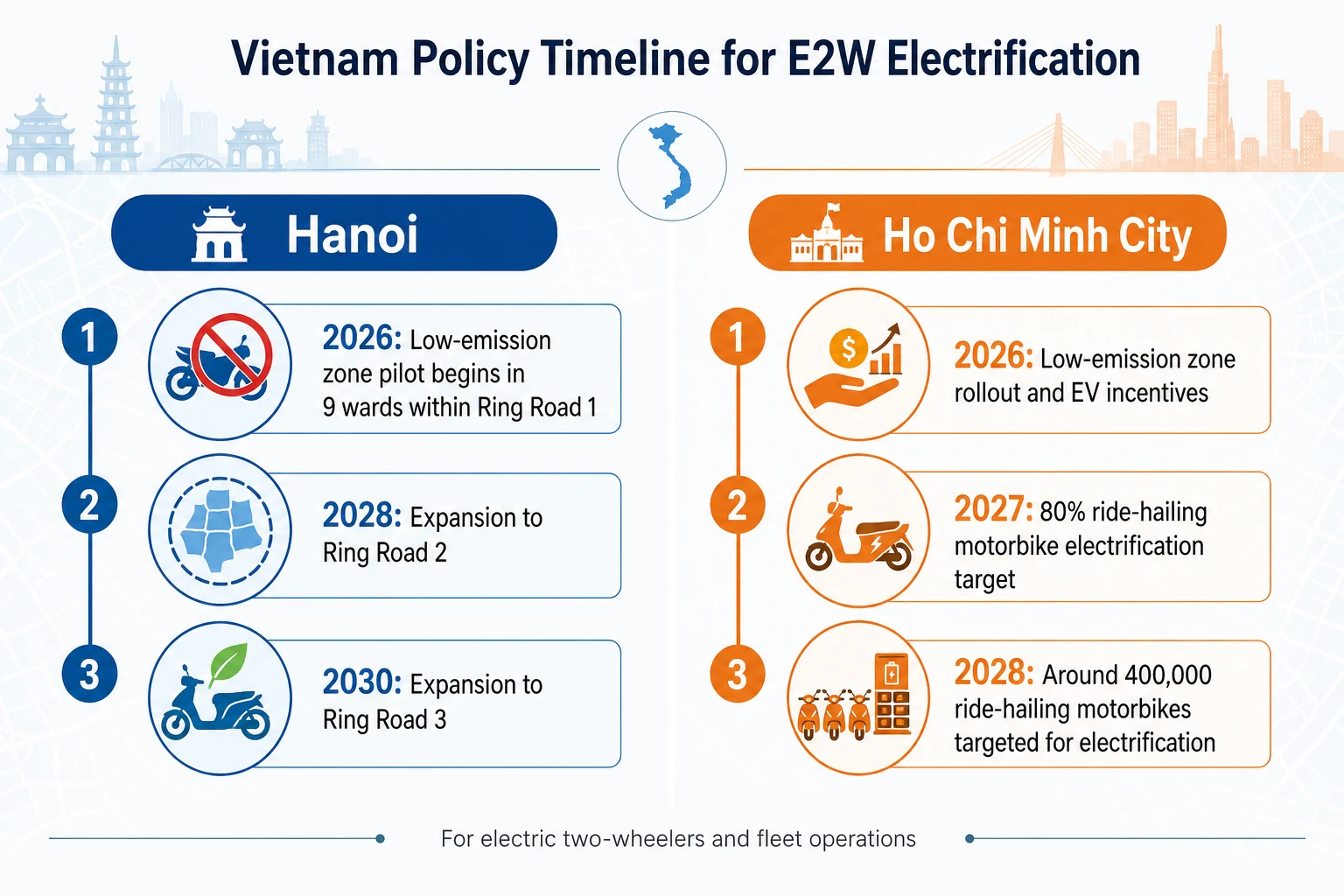
Starting in mid-2026, Hanoi is piloting low-emission zones in nine central wards within Ring Road 1, gradually tightening access for high-emission vehicles. Diesel trucks over 3.5 tons are barred outright, and cars failing to meet Euro 4 standards face progressive restrictions. Gasoline motorcycles used for app-based ride-hailing and delivery services are also subject to tighter control than private motorcycles, because they run more kilometers per day and spend more time in congested urban streets. Over the next several years, Hanoi plans to extend these zones outward to Ring Road 2 and Ring Road 3, creating a clear long-term path toward cleaner transport in the wider metropolitan area.
Ho Chi Minh City is following a similar direction, but with more emphasis on incentives, complementing restrictions with financial support. From 2026, the city plans to roll out low-emission zones and is offering measures such as registration-fee waivers, purchase support of up to about 10% of the value of a new electric motorbike (capped at around USD 190), and compensation equal to roughly 70% of the remaining value of scrapped vehicles. Poor and near-poor households receive enhanced support, and the city's goal is to convert all existing ride-hailing motorbikes to electric alternatives by around 2028.
Taken together, these developments point to one simple reality: vehicles that operate for long hours in city centers—especially platform-based ride-hailing and delivery bikes—will have to electrify first.
As these commercial riders switch to electric motorbikes, they face two major operational headaches.
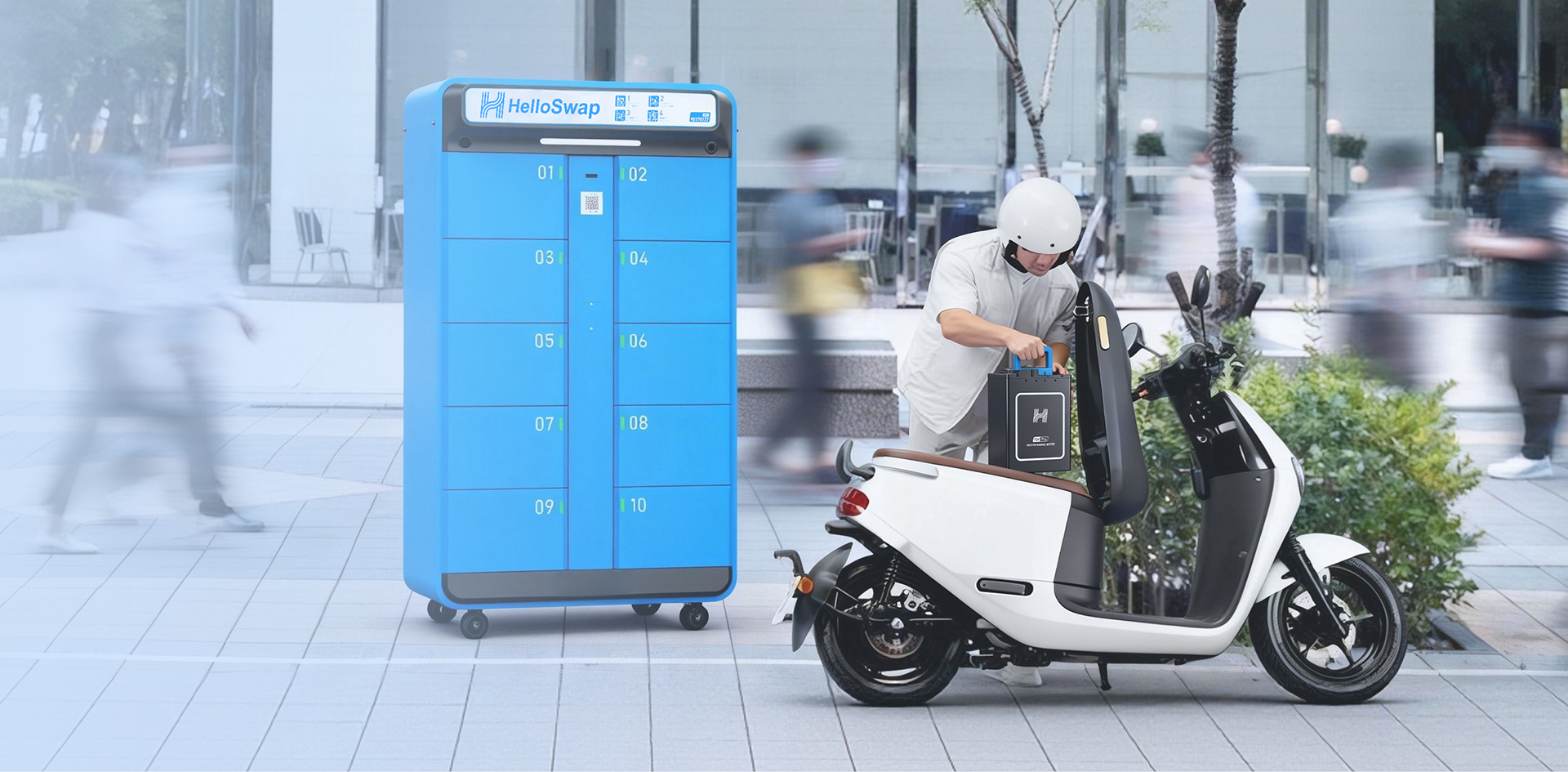
The first challenge is downtime. A delivery rider covering 80 to 150 kilometers a day cannot stop working for several hours just to plug in a battery. Battery swapping solves this problem directly. By exchanging a depleted battery for a fully charged one at a smart cabinet, a rider can get back on the road in just a minute or two.
However, even if a fleet operator wants to use battery swapping, they immediately hit the second challenge: Vietnam's electric two-wheeler market is highly fragmented.
There are many different brands on the street. VinFast leads with over 43% market share in electric two-wheelers, followed by Pega at nearly 16%. Chinese brands Dibao and Yadea hold 12% and 8.6%, while Anbico, NIU, Gogoro, and others split the remaining share.
Against this backdrop, three distinct battery-swapping approaches are emerging in Vietnam's two-wheeler space.


VinFast's energy subsidiary, V-Green, has deployed around 4,500 battery swap cabinets in Vietnam and manages roughly 150,000 charging ports, with reported targets to scale further toward tens of thousands of cabinets. The network is vast and reliable for VinFast owners, but it is a closed system. It only serves VinFast vehicles, leaving fleets that use other brands without access.

Selex Motors, based in Hanoi, has built a swap network that specifically targets delivery and ride-hailing fleets, working with platforms like Grab and Lazada. Unlike closed systems, Selex batteries are designed to be compatible with a large share of existing electric motorcycle models, and swaps can be completed in under 2 minutes via Selex's app and battery stations. Stations are often located at convenience stores, targeting the exact routes commercial riders use daily.

In 2026, Honda and LG Energy Solution, together with Hanoi authorities, launched a battery-swapping pilot with about 50 swap stations and 500 swappable electric two-wheelers. LG supplies standardized 2170 cylindrical battery cells and oversees battery safety and life-cycle operations, while Honda provides the vehicles and hardware. The pilot is still early-stage, but given Honda's longstanding presence in Vietnam's gas motorcycle market, it is an important test of standardized swapping for legacy brands.
Each of these models serves a specific niche. Selex has taken important steps toward cross-brand swapping, yet there is still room for larger, multi-city networks that support different voltage classes and a wider mix of vehicle partners.
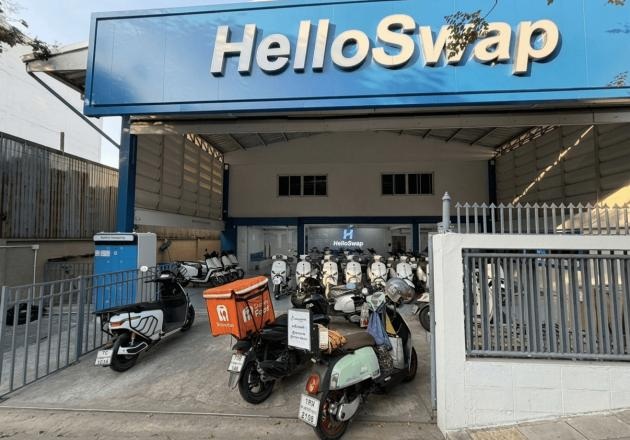
Co-founded by Hello Inc., Ant Group, and CATL, HelloSwap integrates shared mobility operations, digital technology, and battery R&D into a full-stack battery-swapping platform. Across more than 500 cities globally, HelloSwap has developed and operated two-wheeler swap networks for riders, fleets, and local partners, refining both hardware and business models in diverse environments.
For Vietnam, HelloSwap focuses on three core strengths:
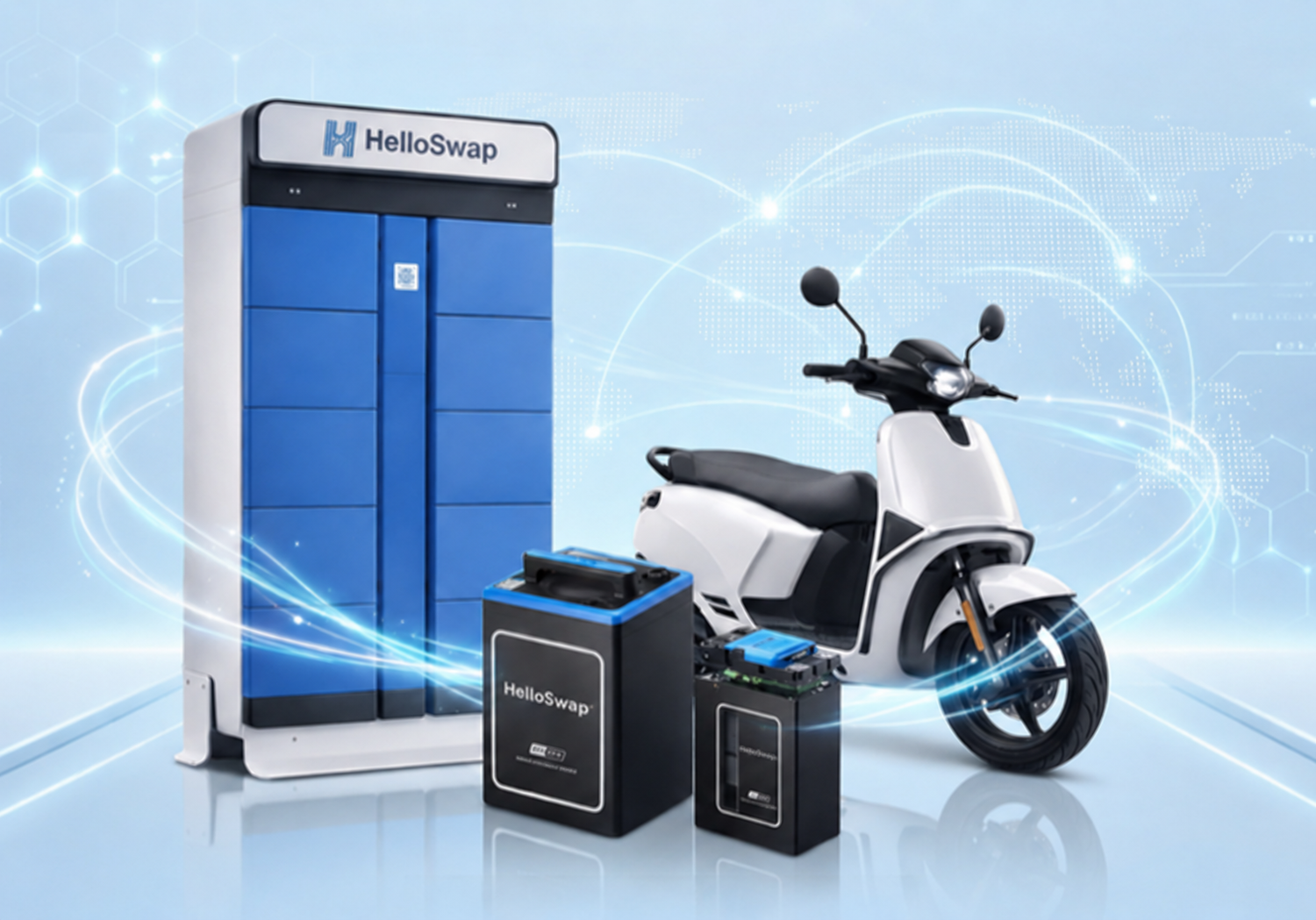
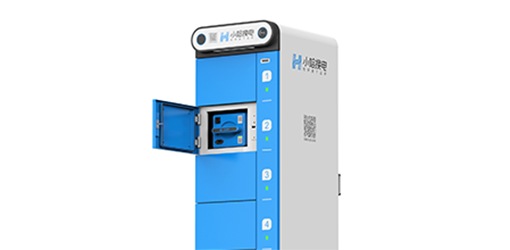
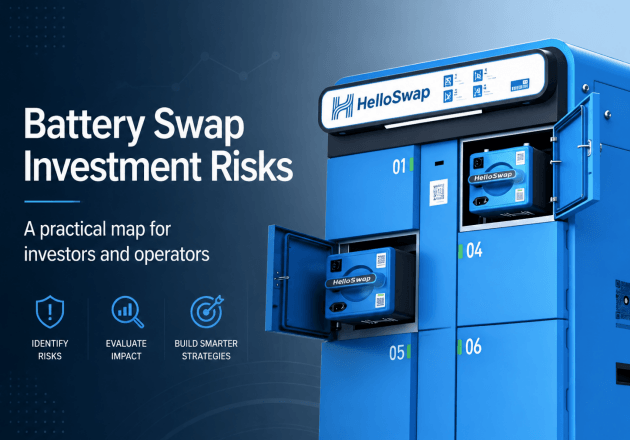
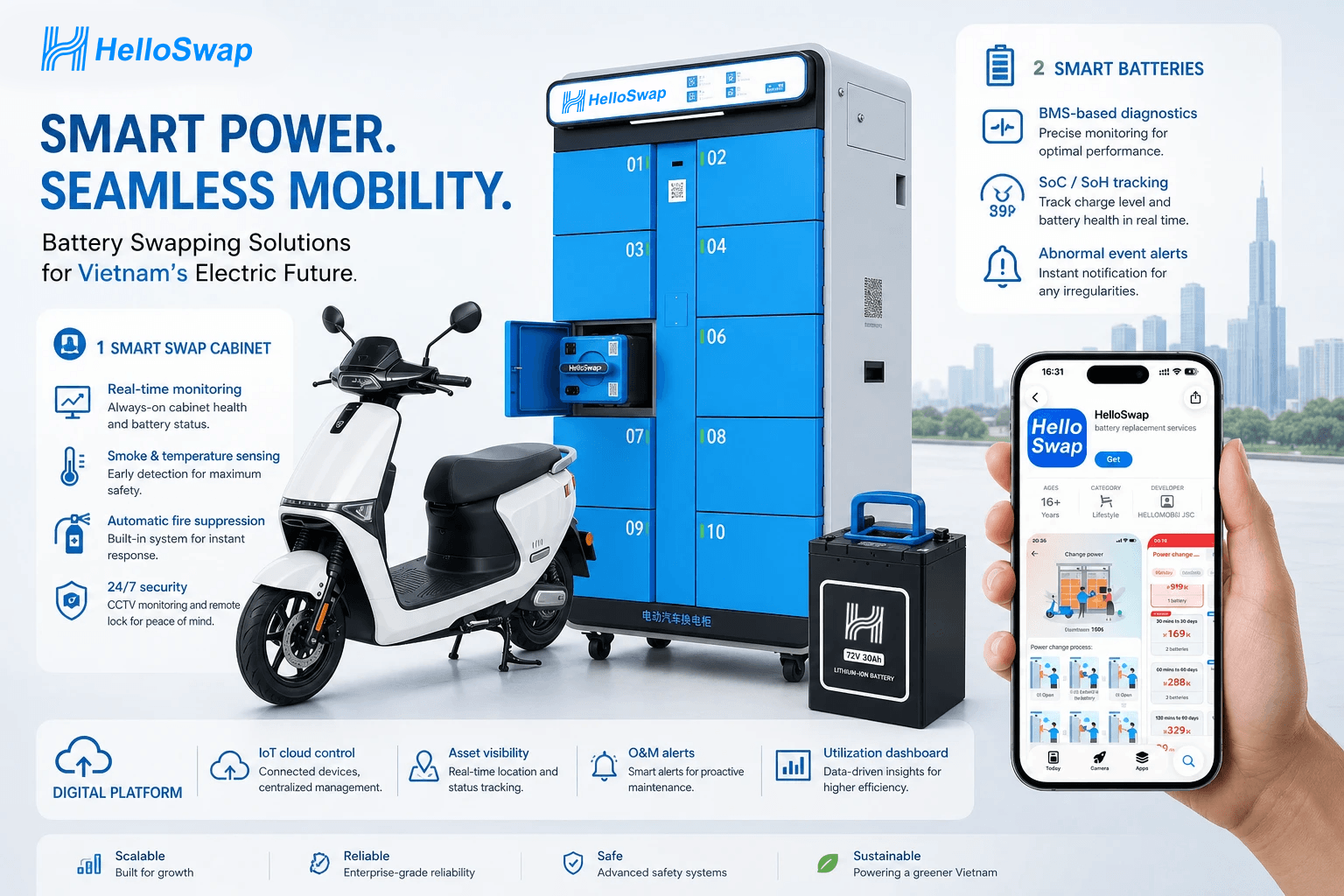
Smart, robust hardware: HelloSwap's intelligent swap cabinets are engineered for outdoor use in demanding environments, with real-time slot-level monitoring, temperature and smoke sensing, automatic fire suppression, and continuous security features. They support modular port expansion and multiple electrical protections, helping operators maintain safe, reliable operations at scale.
High-standard batteries and vehicles: HelloSwap's lithium-ion batteries integrate a self-developed BMS to monitor state of charge, state of health, temperature, leakage, and abnormal events, alongside multiple layers of electrical protection. Purpose-built two-wheeler EVs are designed for urban fleet use, with matched controllers, reinforced cabling, high-grip tires, and upgraded brakes and suspension for demanding routes.
Digital operation closed loop: HelloSwap's platform connects cabinets, batteries, and vehicles through IoT and cloud tools. Consumer apps enable quick swaps and navigation to nearby stations, while operation dashboards give partners real-time visibility into asset health, inventory, and utilization. O&M mobile tools support field teams with fault alerts, routing, and Bluetooth-enabled maintenance in weak-signal areas, keeping day-to-day operations under control.
Our goal is to work with local fleets, distributors, and vehicle partners to extend a shared-connector, multi-spec swap network where compatibility is carefully engineered and documented, rather than assumed.
As Hanoi and Ho Chi Minh City tighten rules around combustion vehicles, Vietnam's commercial riders and fleet managers will need reliable, scalable energy solutions. Battery swapping is already gaining traction across Asia as one of the most practical tools for high-utilization fleets, and Vietnam's policy and market conditions align strongly with this trend.
HelloSwap offers a combination of hardware, software, and operating experience tailored for two-wheeler fleets in dense urban environments. For logistics platforms, ride-hailing operators, local distributors, and investors exploring Vietnam's EV infrastructure opportunities, we are ready to collaborate on:
Site selection and network design for swap cabinets
Fleet integration and rider onboarding models
Technical compatibility planning for specific vehicle partners
Financial and operational modeling for BaaS deployments
To discuss potential partnerships or deployments in Vietnam, you can reach out via HelloSwap's business cooperation channel and explore how a shared, fleet-focused swapping network can support your operations as Vietnam's EV transition accelerates.
Contact Us
hellopowerglobal@hellobike.com
Location
2F, Building 1, No.898 XiuWen Road, MinHang District, Shanghai, China
Copyright © 2024 福建宁德惠智无限科技有限公司 All Rights Reserved. 京ICP证000000号