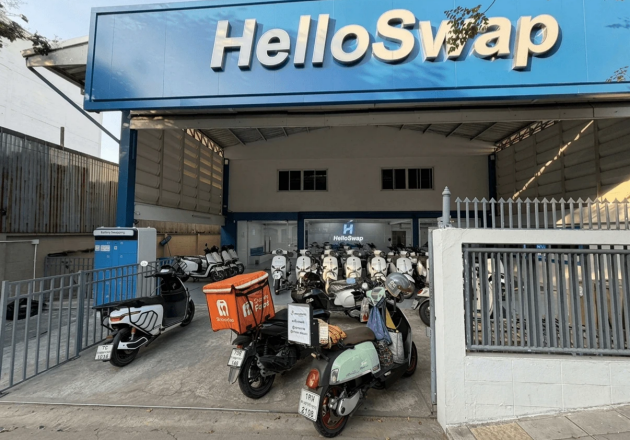
How HelloSwap Is Building and Operating Its Bangkok Battery Swapping Network
2026-07-01
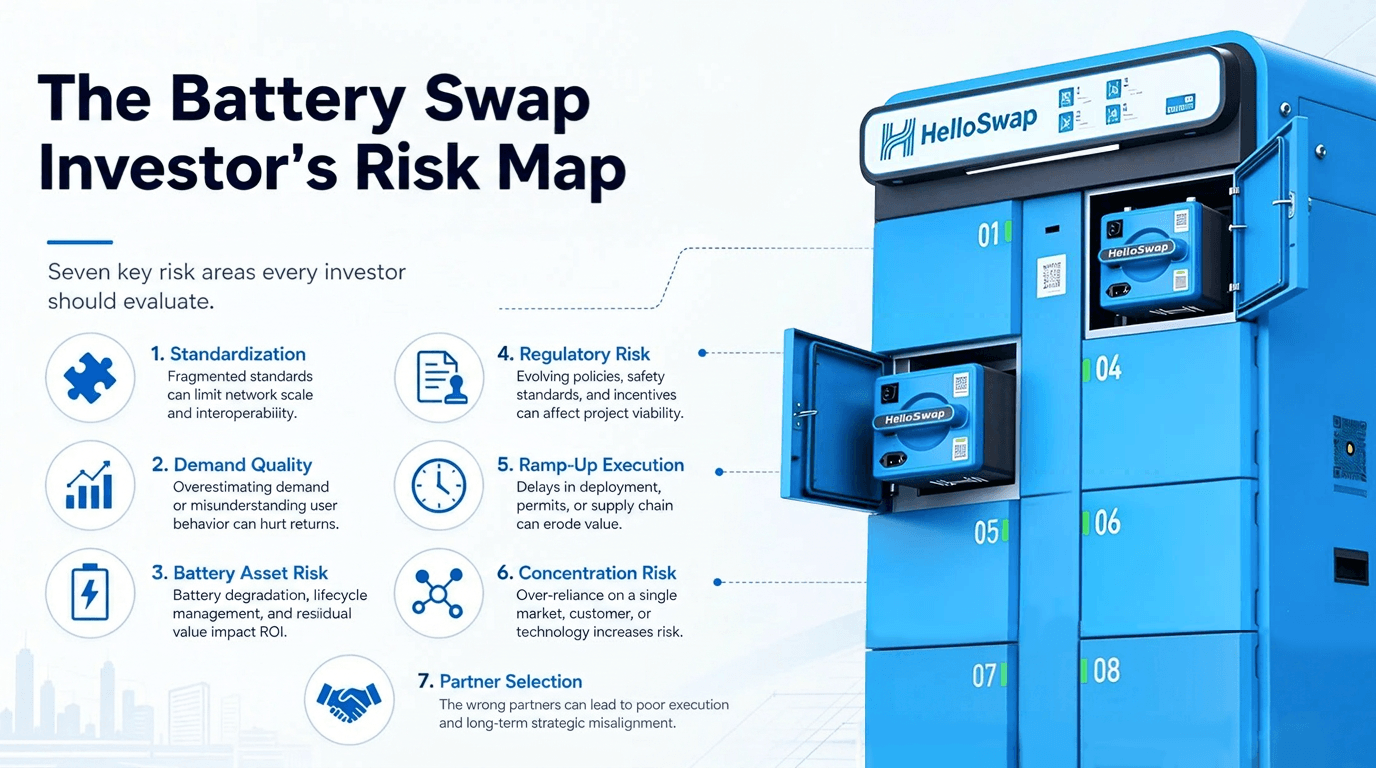
Battery swap projects carry a different risk profile from ordinary EV charging infrastructure. The asset base is different, the operating model is different, and several risks are unique to the swap model itself. At HelloSwap, we map these risks for every market we enter, and we think investors evaluating this space should do the same before committing capital.
This article walks through the risks that matter most in two-wheeler battery swap investments, and where a disciplined operating partner can reduce execution risk.
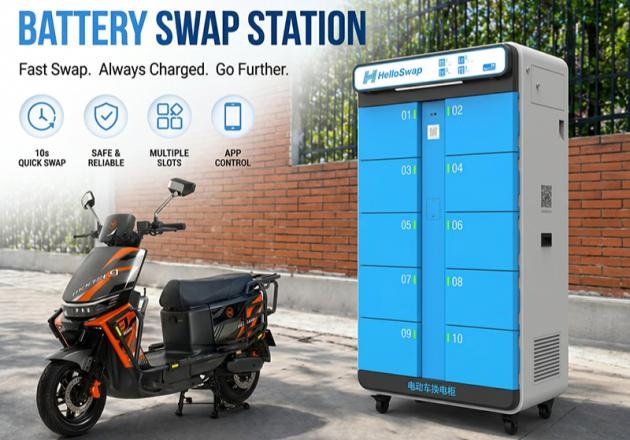
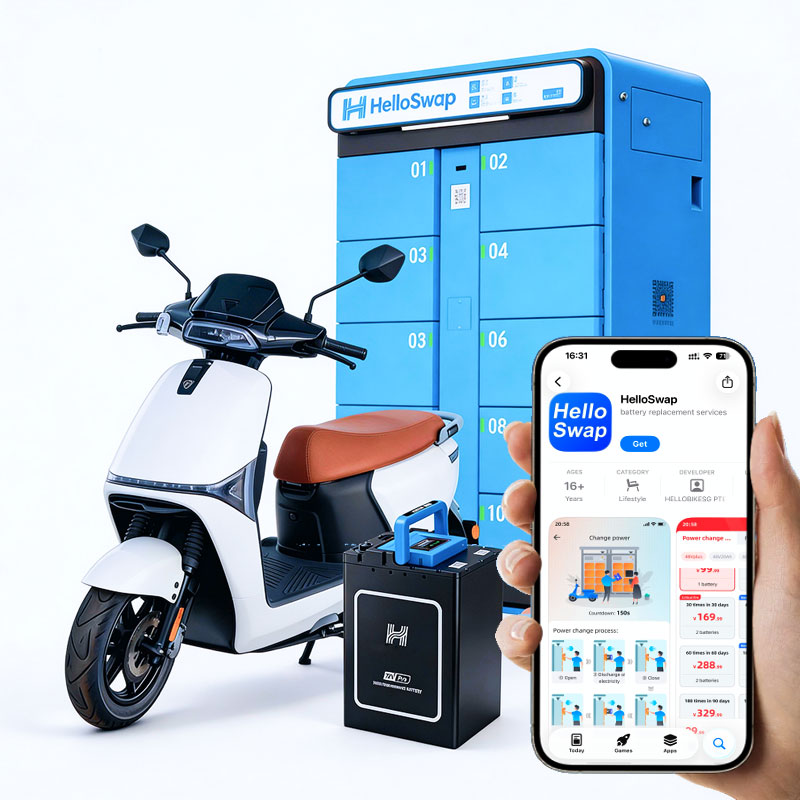
In battery swapping, the cabinet is largely generic hardware. What actually determines whether a network can serve multiple vehicle brands is the battery's connector design and voltage platform, typically grouped into 48V, 60V, and 72V classes across the industry. A cabinet that supports all three through one shared, standardized connector, rather than a proprietary one-off design, is what lets a single cabinet serve scooters, e-bikes, and motorcycles from different manufacturers.
A network built around a single, non-standard connector can still perform well in a pilot. The constraint shows up later, when the operator tries to onboard a second or third vehicle brand and finds the battery interface won't fit without redesigning the pack or the cabinet.
Before committing capital, ask:
Does the platform span multiple voltage classes using one shared connector standard?
Can a new vehicle brand be onboarded without a hardware redesign?
Is compatibility built on a documented, industry-recognizable interface, or a format the supplier controls exclusively?
HelloSwap's battery packs and cabinets share a standardized pin-and-socket design across our 48V, 60V, and 72V lines, which is what lets one cabinet family serve different vehicle brands without a custom rebuild for each.
A market can look attractive in a deck and still produce a weak project. Two-wheeler EV adoption forecasts and electrification targets are useful context, but they don't answer the real question: will this specific network generate enough daily swaps, in this geography, at this price point?
Strong early demand tends to come from riders where downtime has a direct cost: delivery couriers, logistics fleets, and some shared mobility operators, rather than casual private riders.
Diligence questions worth asking:
Who is the first reliable anchor user base?
How concentrated is projected demand in one fleet or platform partner?
What swap frequency per active rider does the model assume, and is that assumption backed by comparable data?
In practice, the strongest launches secure anchor fleet agreements before opening to the general public, then expand as usage data confirms the assumptions.
In a swap network, the battery is the circulating, revenue-generating asset the entire model depends on. Four areas deserve close attention:
Degradation. Cycle life claims should be tested against real duty cycles and local temperatures, not lab conditions. A model that looks healthy on paper can weaken quickly if replacement comes earlier than planned.
Reserve ratio. Too few spare units create shortages and hurt service quality. Too many trap capital in idle inventory. Getting this ratio wrong is one of the most common, and most underestimated, modeling errors in swap networks.
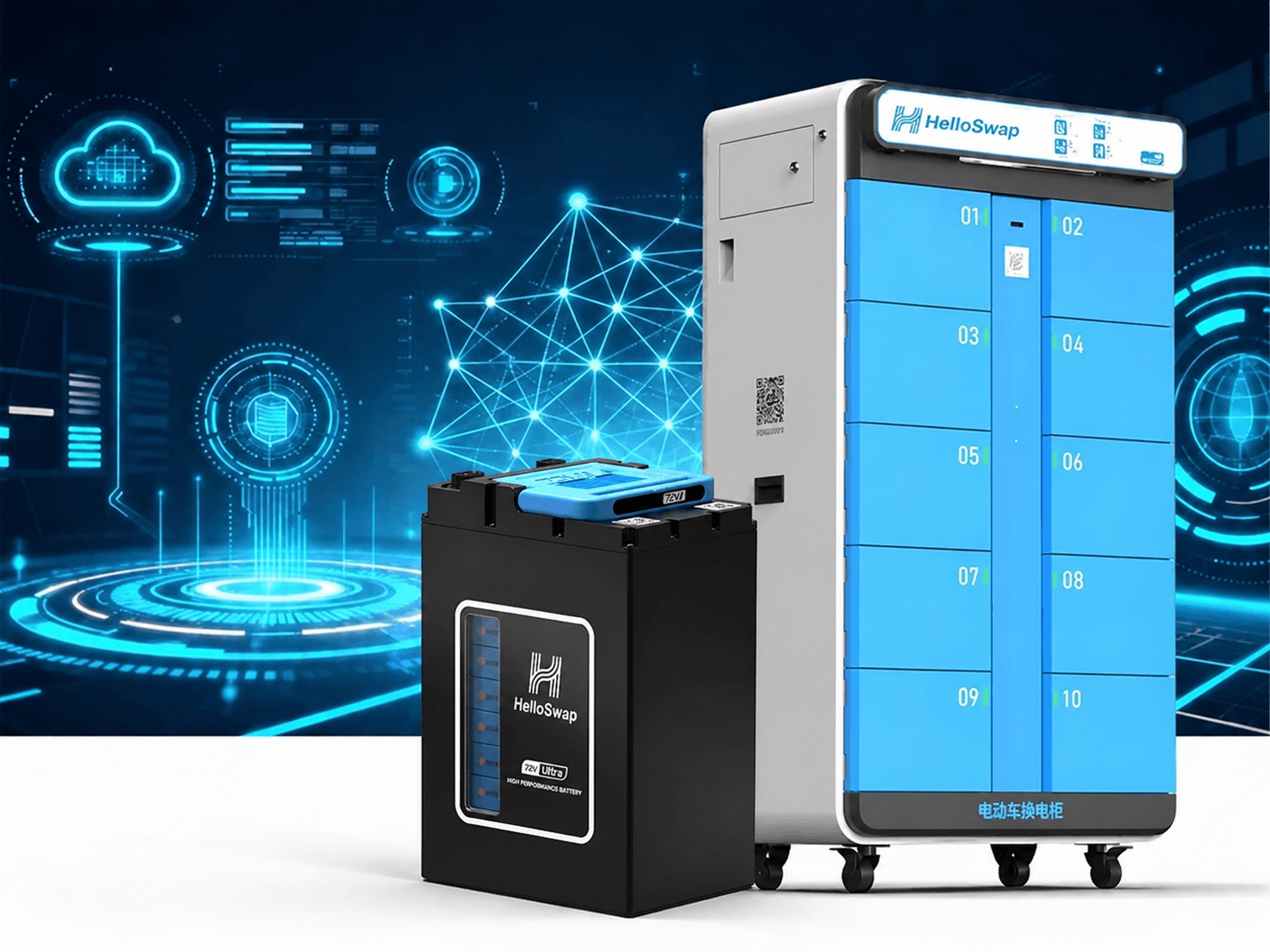
Traceability. Each unit should be visible as an individual asset, with the cabinet reading live BMS data (voltage, temperature, state of charge, state of health, cycle count) to decide whether it's safe to charge and release. Location tracking, whether through GPS, WiFi, or cellular positioning, adds a second layer of visibility once a battery leaves the cabinet.
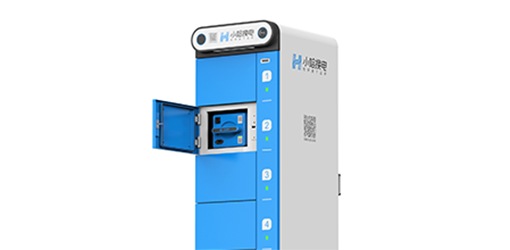
Theft, misuse, and handling damage. Because these packs are designed to be removed by riders, they carry risks a fixed-battery model doesn't: tampering, rough handling, unauthorized use, and loss. When evaluating suppliers, look for anti-tamper locks, anti-pry structures, and guided rails as part of the cabinet design, along with battery-level location tracking that flags when a unit leaves its expected service area. Confirm these costs are already reflected in the financial model rather than added later as a surprise.
Our replenishment planning at HelloSwap runs on the same battery health and location data used for safety monitoring, so a pack flagged for degradation gets pulled from rotation before it becomes a shortage.
[Explore HelloSwap's Battery Swapping Solutions >>]
Battery swapping can look scalable in a market overview and still stall city by city because of fire codes, siting rules, transport regulations, or local permitting practices. This matters more in two-wheeler markets, where deployment intersects with public space use and mixed residential-commercial districts.
Before capital is committed, confirm:
What approvals are required for cabinet siting, indoors and outdoors?
What safety and transport certifications apply in the target market?
How are batteries stored, transported, and retired under local rules?
At HelloSwap, we treat this as part of on-the-ground readiness rather than paperwork: batteries need to meet the transport and safety requirements applicable in each target market, and cabinet design needs to match local electrical and fire safety expectations before deployment, not after a problem surfaces.
A pilot can succeed and the business can still fail afterward. Many teams focus on getting to launch: the first cabinets, the first fleet customer, the first marketing push. The harder test comes later, when day-to-day execution, such as where new cabinets go, how fast batteries get replenished, and how quickly maintenance responds, either holds up or doesn't.
As a cost reference, a 10-slot swap cabinet typically costs between USD 1,400 and 2,000, and battery packs range from USD 240 to 680, depending on configurations. Payback, once cabinets, batteries, vehicles, and operating costs are all accounted for, tends to land within 18 to 30 months at stable utilization, with fleet-backed locations trending toward the faster end.
Two things tend to separate projects that hold up during this period from those that don't:
Market-specific planning. Pricing and rider acquisition should reflect local policy and commuting patterns for that specific city, not a generic template copied from elsewhere.
Hands-on setup support. Getting through permitting, training staff on cabinet operations and customer service, and adjusting the model based on early operating data all matter more than the initial equipment purchase.
Investors evaluating a deal at this stage should ask to see ramp-up data from an existing deployment, not just the launch-day numbers.
The more useful framing isn't "who else is in this market," it's "how dependent is this project on any single relationship." A network can look strong today and still be fragile if one fleet partner controls most of its demand, one landlord controls its best locations, or one local policy shift can delay expansion for months.
For an operating network, this shows up in concrete numbers: how many fleet partners exist, how concentrated demand is in the largest one, and how many independent site relationships the business has. For a project that's still pre-launch, the equivalent question is whether the go-to-market plan depends on securing one specific partner or site, with no real alternative if that deal falls through.
A project spread across three fleet partners and two property owners is structurally more resilient than one built entirely around a single anchor deal, even if the single-deal version looks more impressive on paper today.
By the time an investor reaches partner selection, the real question is which supplier reduces the most execution risk, not which one has the longest feature list.
In our own work with operators, what matters most in practice is rarely the spec sheet. It's the support around it: pricing and rollout sequencing based on local data rather than assumption, hands-on training during setup and early operations, and a supply chain that can deliver replacement units and parts without long delays. A supplier that only ships hardware leaves the operator to solve all of this alone.
Whether the battery-swapping sector is growing isn't really the question. It clearly is. The real question is whether a specific project has connector-level flexibility, demand backed by real anchor users, disciplined asset management, and local regulatory readiness, not just a good narrative.
At HelloSwap, backed by Hello Inc., Ant Group, and CATL, we've built our approach around these same points: shared-connector compatibility, anchor-fleet-first sequencing, and staying involved well past the day a network goes live.
These same seven areas are where we focus when we assess a new market ourselves, summarized here as a starting point for your own diligence:
Risk Category | Key Diligence Question | Evidence to Confirm |
Standardization | Does the battery interface support multiple voltage platforms (48V/60V/72V) and work across vehicle brands? | Connector specification documents, multi-brand compatibility cases |
Demand Quality | Who is the first anchor user base, and is demand concentrated in a single fleet? | Fleet contracts, actual daily swap frequency data |
Battery Asset | Is the reserve ratio adequate, and are tracking and anti-theft features in place? | BMS data access, anti-tamper lock and connector design specs |
Regulatory | Are fire, transport, and siting approval processes clear in the target market? | Local compliance documentation, supplier's track record on approvals |
Ramp-Up Execution | What are the key operating metrics for the first 6 to 18 months? | Utilization targets, maintenance response time commitments |
Concentration | Is the project overly dependent on a single fleet partner, landlord, or policy? | Number of independent partners, diversity of site sources |
Partner Selection | Can the supplier provide on-the-ground support beyond hardware? | Localized site-selection plans, hands-on training and setup support |
If you're evaluating a two-wheeler battery swap opportunity, we're glad to talk through what a realistic deployment path would look like for your situation. Contact our team to start that conversation.
Contact Us
hellopowerglobal@hellobike.com
Location
2F, Building 1, No.898 XiuWen Road, MinHang District, Shanghai, China
Copyright © 2024 福建宁德惠智无限科技有限公司 All Rights Reserved. 京ICP证000000号